

Legislation
General Regulation - Occupational Health and Safety Act
N.B. Reg. 91-191
Part III INDOOR AIR QUALITY
Section 25 Respiratory protective equipment - when required
25. Where
- (a) the level of concentration of an air contaminant may exceed 50% of the occupational exposure limit in conditions that are part of the normal work procedure,
- (b) there is the possibility of accidental exposure to a level of concentration of an air contaminant in excess of the occupational exposure limit, or
- (c) the oxygen content of the atmosphere is less than or may be less than 19.5% by volume,
an employer shall provide adequate respiratory protective equipment to each employee who may be exposed to the conditions described in paragraphs (a) to (c).
[N.B. Reg. 2022-27, s. 15]
Part VIII HANDLING AND STORAGE OF MATERIALS
Section 75
- 75. (1) An employer shall ensure that a portable compressed gas container is used, stored and handled so as not to endanger an employee's health or safety.
- (2) In complying with subsection (1), an employer shall use as a guide
- (a) information on a safety data sheet,
- (b) the specifications provided by the supplier, and
- (c) the safe handling rules in CGA standard P-1-2008, Safe Handling of Compressed Gases in Containers - 11th Edition or a standard offering equivalent or better protection.
- (3) Repealed. [N.B. Reg. 2022-79, s. 14]
[N.B. Reg. 2001-33, ss. 25, 26; 2016-7, s. 2; 2022-79, s. 14; 2024-38, s. 50]
Part XVIII WELDING, CUTTING, BURNING AND SOLDERING
Section 273
273. An employer shall ensure that an employee is protected from the effects of harmful fumes and gases or particles emitted from welding, cutting, burning or soldering operations by
- (a) providing a local exhaust system close to the source of the fumes, gases or particles in an indoor welding, cutting, burning or soldering area,
- (b) monitoring the exposure level of employees to harmful fumes and gases or particles emitted from welding, cutting, burning or soldering operations to ensure that the level of concentration of air contaminants does not exceed the occupational exposure limits, and
- (c) monitoring the work areas in proximity to the welding, cutting, burning or soldering area to ensure that the level of concentration of air contaminants does not exceed the occupational exposure limits.
[N.B. Reg. 2022-79, s. 76]
Section 274
- 274. (1) An employer and an employee shall each comply with the requirements of CSA standard W117.2-12 (R2017), "Safety in welding, cutting and allied processes" or a standard offering equivalent or better protection.
- (2) This section does not apply where a firefighter is engaged in a rescue.
[N.B. Reg. 97-121, s. 41; 2001-33, s. 91; 2022-79, s. 77]
Section 274.1
274.1 Where the safety of any person depends on the strength of a weld, an employer shall ensure that the weld is done by a welder who
- (a) holds at least a Class B welder's certificate of qualification issued in accordance with New Brunswick Regulation 84-174 under the Boiler and Pressure Vessel Act , or
- (b) is employed by a company certified to CSA standard W47.1-09 (R2019), "Certification of companies for fusion welding of steel" or CSA Standard W47.2-11 (R2020), "Certification of companies for fusion welding of aluminium" or a standard offering equivalent or better protection.
[N.B. Reg. 2001-33, s. 92; 2022-79, s. 78]
Section 275
- 275. (1) No employee shall commence a welding, cutting, burning or soldering operation unless the employee has thoroughly inspected the entire area surrounding the area around the operation to ensure that all combustible, flammable or explosive material, dust, gas or vapour has been removed from the area, if possible, or that adequate precautions have been taken to prevent fire or explosion.
- (2) An employer shall not permit any welding, cutting, burning or soldering operation until the precautions required by subsection (1) have been carried out.
- (3) Clause 11.7 of CSA standard W117.2-12 (R2017), "Safety in welding, cutting and allied processes" or a standard offering equivalent or better protection shall be used as a guide to establish suitable fire extinguishing measures and other fire prevention measures.
[N.B. Reg. 2022-79, s. 79]
Section 276 Clothing Protection
276. An employer shall ensure that an employee engaged in a welding, cutting, burning or soldering operation wears, and an employee engaged in such an operation shall wear, appropriate protective equipment except that
- (a) the protective gloves required by paragraph 42(a) shall be leather gauntlet type gloves with arm protection, and
- (b) the adequate body covering required by paragraph 42(c) shall be flame retardant work clothing and an apron of leather or of other material offering equivalent protection.
Section 277
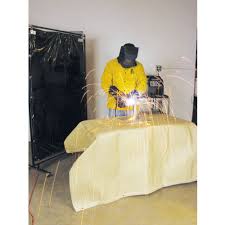
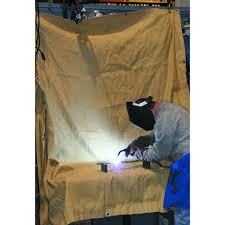
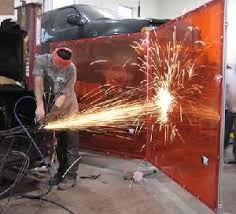
- 277. (1) An employer shall ensure that an employee working in the area and not engaged in a welding, cutting, burning or soldering operation is protected from harmful radiation by providing adequate screening around the operation or by preventing the employee's entry to the area where the operation is being conducted.
- (2) This section does not apply where a firefighter is engaged in a rescue.
[N.B. Reg. 97-121, s. 42]
Section 278 Welding on Containers
- 278. (1) Where a container or pipe, or any pipe, valve or fitting connected to the container or pipe, holds or may have held an explosive or flammable substance, an employer shall ensure that the container or pipe and the pipe, valve or fitting connected to the container or pipe are completely drained, cleaned and ventilated in accordance with subsection (2) before any process involving the application of heat is undertaken.
- (2) To drain, clean and ventilate as required by subsection (1), an employer shall ensure that
- (a) inlet pipes are disconnected and blocked off or moved out of alignment or the inlet valves are locked in the closed position;
- (b) where residual liquid remains, it is removed by an employee without going inside the container or pipe;
- (c) where steam is available, all openings except the vent pipe and steam inlet are closed and the steam is blown into the container or pipe and any pipe, valve or fitting connected to the container or pipe for a period of time suitable for the conditions and the nature of the explosive or flammable substance, with the lids and manhole plates opened during the last one-fifth time of the steaming period;
- (d) where steam is not available, the container or pipe and any pipe, valve or fitting connected to the container or pipe is kept filled with running water for a period of at least twenty- four hours;
- (e) after cleaning, the container or pipe and any pipe, valve or fitting connected to the container or pipe is thoroughly ventilated with forced or induced draft air for a minimum period of two hours;
- (f) after ventilation, a competent person examines the interior of the container or pipe and any pipe, valve or fitting connected to the container or pipe to see that it is free from residue and tests air samples to ascertain that all explosive or flammable vapours have been removed;
- (g) a record is made of the procedures and the tests required by paragraph (f) and is dated and signed by the person taking the tests;
- (h) the person who takes the tests required by paragraph (f) certifies that work involving the application of heat can be safely undertaken on the container or pipe and any pipe, valve or fitting connected to the container or pipe; and
- (i) where the tests required by paragraph (f) indicate the presence of explosive or flammable substances, the steaming or flooding, ventilating and testing operations are repeated.
Section 279
- 279. (1) An employer shall ensure that a welding, cutting, burning or soldering operation is not undertaken
- (a) on a closed container,
- (b) on a container or pipe, or any pipe, valve or fitting connected to the container or pipe, containing any amount of an explosive or flammable substance, or
- (c) on a container or pipe filled with exhaust from an internal combustion engine.
- (2) An employer shall ensure that equipment and materials to be welded, cut, burned or soldered are free of hazardous substances.
[N.B. Reg. 2022-79, s. 80]
Section 279.1 Hot tapping
- 279.1 (1) Despite subsection 279(1), an employer who establishes a code of practice in accordance with subsection (2) may allow hot tapping to be undertaken on a pipe or equipment in service containing a flammable or explosive substance.
- (2) Before any hot tapping begins, an employer shall establish a code of practice that is specific to the type or class of hot tapping to be performed and is approved by an engineer.
- (3) A code of practice for hot tapping shall contain the following information:
- (a) a description of the hot tapping to be performed;
- (b) a description of any possible hazards that may affect the health or safety of employees;
- (c) the procedures to be followed and the equipment to be used when hot tapping; and
- (d) an emergency response procedure.
- (4) An employer shall ensure that
- (a) only competent employees are permitted to perform hot tapping,
- (b) the point in the pressure containing barrier to be hot tapped is checked and strong enough for the hot tapping to be performed safely,
- (c) there is sufficient working space at the location at which hot tapping will be performed,
- (d) exit routes are available and their locations are known by employees who perform the hot tapping,
- (e) employees wear appropriate personal protective equipment when hot tapping is performed,
- (f) material being supplied to the pipe or equipment being hot tapped can be shut off immediately in an emergency,
- (g) the hot tapping machine and accessories are of adequate design and capability for the work to be performed, and
- (h) the pressure in the pipe or equipment being hot tapped is as low as possible during the hot tapping.
[N.B. Reg. 2022-79, s. 81]
Section 280 General
280. An employer shall ensure that
- (a) tables, jigs or work benches used for support during welding, cutting, burning or soldering operations are made of fire resistive materials, and
- (b) all surfaces in welding, cutting, burning or soldering areas are made of non-reflective materials.
Section 281
281. Where in a welding, cutting, burning or soldering operation a compressed gas hose or welding cable is placed over a sharp edge or may be struck by falling objects, an employer shall ensure that suitable protection for the hose or cable is provided.
Section 282
- 282. (1) An employer and employee shall each ensure that welding and cutting torches and their fittings and regulators are inspected before use to ensure they are in a safe working condition.
- (2) Where inspection reveals a defect in the equipment mentioned in subsection (1), an employer shall ensure that the equipment is repaired by a competent person and that replacement parts or fittings meet the manufacturer's specifications.
Section 283
283. An employer and employee shall each ensure that the supply of gas is cut off to any part of the welding, cutting, burning or soldering operation when a leak of the supply of gas being used develops and that work is not resumed until the leak is repaired.
Section 284
- 284. (1) An employee shall ensure that an electric welding machine is moved only by the means provided for that purpose.
- (2) An employee shall ensure that an electric welding machine is not pulled by its electric cables.
- (3) An employer shall ensure that an electric welding machine is located in a dry area in accordance with CSA standard C22.1-18, "Canadian Electrical Code, Part 1", as amended from time to time.
- (4) An employer shall ensure that appropriate fittings are used to fasten the electric supply cable securely so that the inner wires of an electric welding machine are not exposed to damage and the cable cannot be separated from the fittings.
[N.B. Reg. 2001-33, s. 93; 2022-27, s. 39]
Section 285
285. An employee shall ensure that a welding or cutting torch
- (a) is not left unattended until the gases have been completely shut off, and
- (b) is not hung from a regulator or other equipment so as to come into contact with a cylinder.